




















Image


Scientists at Earlham Institute investigating the genetic diversity of UK wildflower species have developed AI-driven techniques to improve the speed and effectiveness of seed classification.
The study, published in Applications in Plant Sciences, highlights the potential of artificial intelligence (AI) and image analysis to accelerate solutions for challenges facing the commercial seed sector.
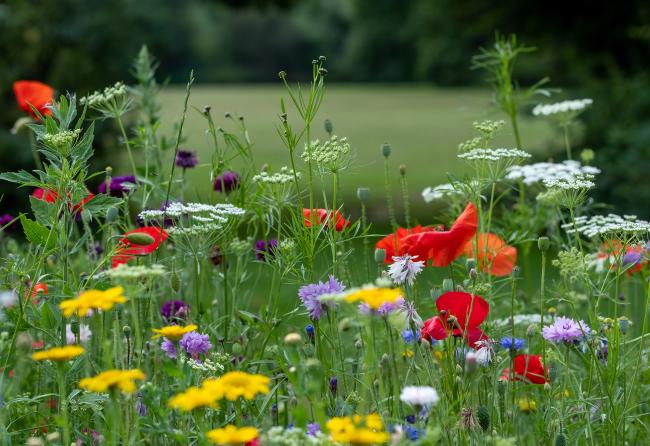
Wildflowers are a vital resource for biodiversity and ecosystem resilience. But over the last century the UK has lost 97 per cent of its wildflower meadows. Recent environmental policies have prioritised the reintroduction of wildflower meadows in our countryside, through initiatives such as Biodiversity Net Gain and farming grants, resulting in a surge in demand for native plant seed.
However, the wildflower seed market is not subject to the same regulatory framework that currently applies to agricultural products. This can make it difficult for land managers to assess the quality and composition of seed stock. Poor quality seed stock can undermine restoration projects - establishing plants poorly suited to conditions, or failing to deliver the biodiversity gains a project was designed to achieve.
Jonathan Ashworth is a PhD Researcher at Earlham Institute and lead author on the paper: “There’s a lot of investment that goes into commercial wildflower products, but it’s difficult to quantify and classify mixed wildflower seed stock that’s been commercially cultivated. Many of the environmental incentives rely on indicator species being present, but it’s currently difficult to quantify the presence of those species in a highly diverse seed stock.”

Jonathan Ashworth, PhD Researcher
By automating classification with AI this research offers a route to bring greater accuracy and efficiency to an otherwise unregulated market.
The study evaluated multiple AI segmentation and classification approaches to determine which combination of models performed better for identifying species and quantifying their frequencies under real-life constraints, including the presence of wildflower species that the models had not seen (been trained on) before; a task known as open set classification.
More accessible platforms, including Random Forest models on scikit-learn, achieved classification of around 96/97 per cent. More advanced approaches, including neural network-based methods, achieved accuracy approaching 99 per cent in some cases, but required substantially greater computing resources.
“We started with more traditional machine learning approaches, and as the project developed we were able to bring in more advanced tools. It became a very iterative process – we were learning as we went, testing different models and building on what we had tested,” Jonathan said.
“As seed identification is labour-intensive and requires advanced botanical knowledge, we wanted to ensure that the resulting methods were user-friendly. For image data we used a simple flatbed scanner, obtaining over 145,000 images representing seeds from commonly traded wildflower species native to the United Kingdom. We trained and evaluated a wide variety of linear, ensemble, and neural network machine learning models on both tabular and image data.”

The study provides practical guidance on selecting between tabular or image-based classification methods - balancing accessibility, computational cost, and robustness in real-world conditions. It highlights an important consideration for deploying AI in commercial settings, where speed and computer power are often just as important as achieving the highest possible accuracy and precision.
Dr Jose De Vega, Group Leader and research co-author said: “The study is a practical example of how AI and deep learning are most valuable when closely connected to biological expertise, clearly defined real-world problems, and an understanding of how predictive tools may ultimately be used in practice.”

The study also benefited from collaborative expertise across Earlham Institute. The work was supported through a series of undergraduate summer projects, with successive students building on the testing and modelling developed by those before them.
Researchers then took part in a machine learning workshop and hackathon at the Institute, bringing together colleagues from different specialisms to introduce neural network models and helped the team move into more advanced approaches.
"I was really impressed by our three successive undergraduate summer interns who contributed to this study and are co-authors," said Dr De Vega. "They brought diverse perspectives and insight to the project, and their input demonstrates the reciprocal value of well-designed internships: interns gain meaningful research experience, while the laboratory benefits from fresh ideas and tangible research outputs."
The research team welcomes interest from commercial seed companies keen to collaborate on future applications of this work.
Jonathan Ashworth is supported as part of the BBSRC Norwich Research Park Biosciences Doctoral Training Partnership (NRPDTP) and ARIES DTP. His PhD research is in collaboration with The Eden Project’s National Wildflower Centre.
Earlham Institute
The Earlham Institute harnesses data-driven biology to accelerate solutions for health, biodiversity and food security. The Institute combines world-class technology and interdisciplinary expertise across genomics, engineering biology and data science to deliver scientific breakthroughs with economic and social impact.
Based at Norwich Research Park, Earlham Institute is one of eight institutes strategically funded by BBSRC.