When I first joined the Earlham Institute, I expected to spend most of my time focused on the narrow details of my own project. However, I’ve realised that one of the best parts of research is how collaborative it is, especially at the Norwich Research Park which is unique in having such a wide range of expertise.
Despite the different research institutes each having their own speciality, their various seminars, training sessions and facilities are open to everyone. This makes it easy to connect across groups, and those conversations often lead to interdisciplinary collaboration and new ideas.
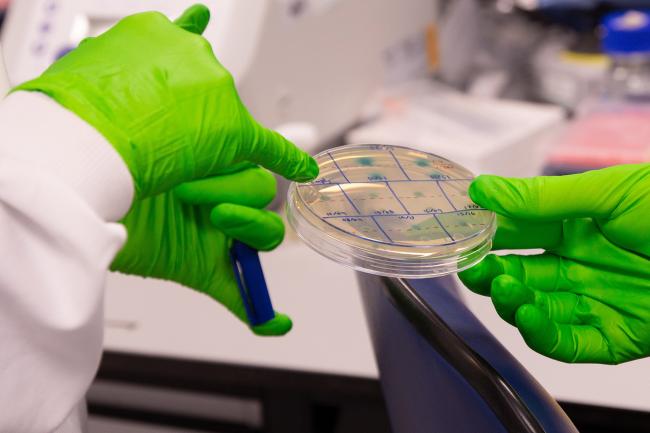
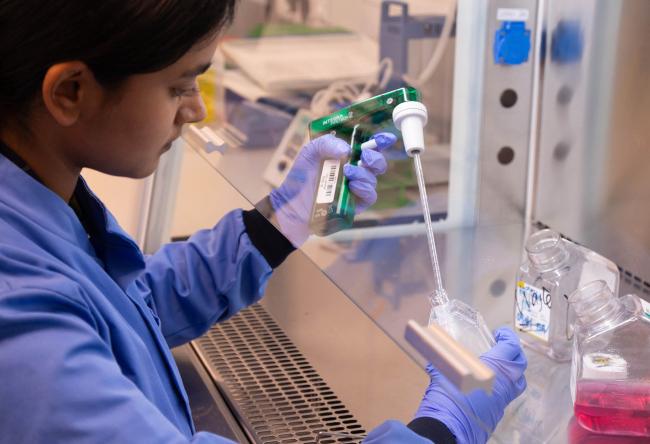
A good example in my case is microscopy, an area I had very minimal experience in at the beginning of my placement. Collaborating with the John Innes Centre Bioimaging team, who provide a range of custom, state-of-the-art microscopy tools, opened the door to technologies and techniques I didn’t even know existed.
One of the most exciting was using a vibratome to cut 30 micrometre cross-sections of wheat roots. These ultra-thin sections revealed how fungal structures colonise root architecture, leading to new research questions and experimental directions within my project.