Research culture to crop resilience: our top five moments of 2025
We’ve been reflecting on our highlights of 2025!
It’s that time of year again! We’ve been reflecting on our highlights of 2025, from collaborative conferences to significant policy impact – it’s been a fantastic year for all of us at the Earlham Institute.
Earlier this year, we were delighted to welcome Dr Lauren Messer and Dr William Shaw as our new Career Development Fellows.
The Career Development Fellowship programme at the Earlham Institute provides support and mentorship over a 3-year period to help researchers apply for longer-term funding and establish their independent research careers.
"Lauren and Will bring a wealth of expertise in microbial communities and synthetic biology, complementing the exciting areas of data-driven bioscience at the Earlham Institute. The development programme is a great way for scientists to take the next steps in their careers in a supportive and collaborative research environment," said Prof Neil Hall, Director of the Earlham Institute.
At the Earlham Institute, Lauren is exploring microbial communities from some of the UK’s most important natural spaces that are integral mediators of biodiversity, while Will is developing innovative technologies for rewriting plant chromosomes.
Lauren Messer, Career Development Fellow
Will Shaw, Career Development Fellow
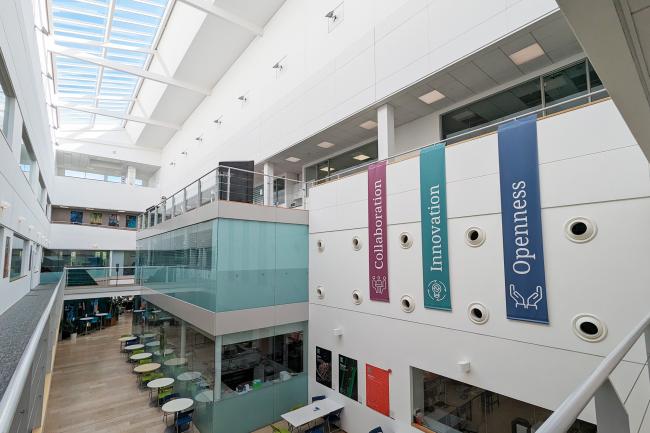
This two-day inaugural event brought together the eight BBSRC strategically-funded institutes to facilitate knowledge sharing, network building, and best practices in research culture.
Over 200 people attended the event which is hoped to be a starting point for making important changes to promote positive research culture.
"While we’ve made significant progress, there is still much more to learn from one another. We hope the conversations sparked at this conference will lead to tangible improvements in research culture," said Dr Siobhán Dorai-Raj, Earlham Institute’s Inclusion, Diversity, Equality and Accessibility Manager.
A new project - funded by a £8.5M grant from the UK Government’s Advanced Research and Invention Agency (ARIA) – is working to leverage advances in engineering biology to establish synthetic plant chromosome (synPAC) technologies.
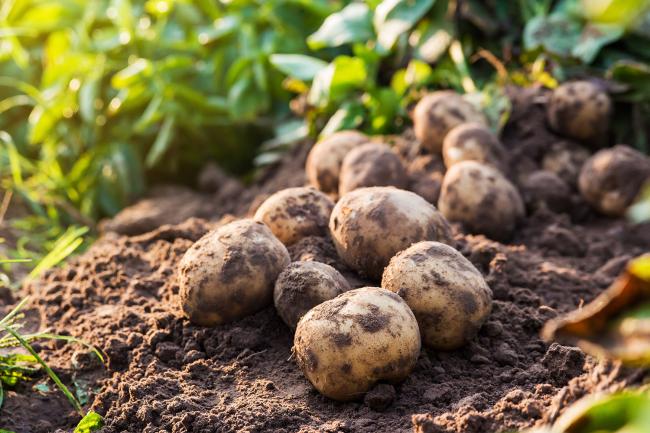
Delivered by a collaboration from the Earlham Institute, Manchester Institute of Biotechnology at the University of Manchester, and the John Innes Centre, the project will first focus on potatoes, a staple crop for millions of people.
"Climate instability, changes in land use, and global conflicts are creating increasing demands on our farmland. This requires us to rethink how we develop new crops to feed our growing populations, replace fossil fuels, and provide new platforms for biomanufacturing," said Prof Anthony Hall, Head of Plant Genomics and project co-lead.
“These technologies have the power to remove breeding bottlenecks that have stymied development of new and improved crops. We want to establish a robust, flexible, and reproducible engineering ecosystem to allow the targeted programming of plants at a scale that can transform food security and open up new areas of biomanufacturing," he added.

Single-cell and spatial technologies continue to develop at pace, generating new insights into cellular diversity within living systems.
Held in partnership with the UEA School of Biological Sciences, the Norwich Single-Cell and Spatial Symposium explored the vast range of applications of single-cell and spatial technologies, including microbial, plant, animal and human health and disease.
"The symposium has always been a space for early career researchers to present early work, and for people to present very preliminary findings. It was never intended to be a large, intimidating conference, but more a small, friendly meeting with room for discussion," explained Dr Iain Macaulay, Group Leader at Earlham Institute.
The Earlham Institute, together with public affairs colleagues across the Norwich Research Park advocated tirelessly for the implementation of a new precision breeding law.
The legislation came into effect on 13 November this year enabling new technologies to support UK farming adapt to climate change and biodiversity loss.
"Today's implementation of the Precision Breeding Act is a significant milestone for protecting our food security. Agricultural systems are facing enormous pressures driven by climate change, growing populations and new diseases. It is vital that we harness all of the technical innovations at our disposal, using the power of science to help farmers adapt to our changing world," explained Prof Neil Hall.
From bioinformatics to engineering biology, our new cohort of PhD students who joined us in October have travelled from around the world to explore their research interests at the Earlham Institute. We are delighted to welcome them to our community!