Article Science

2025 in focus: essential reading from our scientists

From vital new genomic resources to fundamental discoveries about our DNA. Here are some of the highlights from our scientific year you might have missed.

15 December 2025

2025 has been a strong year for data-driven biology at Earlham Institute. 

From vital new genomic resources to fundamental discoveries about our DNA. Here are some of the highlights from our scientific year you might have missed.

Automating high-throughput plant transformation

High-throughput studies in plant synthetic biology can face significant bottlenecks, including long generation times and high costs. To address these challenges, scientists at the University of Cambridge collaborated with the Earlham Biofoundry to develop a new protocol for genetic and scalable transformation into Agrobacterium tumefaciens

Using the Opentrons automated liquid-handling robot, they established a semi-automated workflow that reduces cost, time, and manual labour without compromising transformation efficiency.

Davide Annese and Carolina Grandellis of the Earlham Biofoundry

Davide Annese, Earlham Biofoundry Automation Specialist, with Dr Carolina Grandellis, Head of the Earlham Biofoundry.

HiFi assemblies of agriculturally important fungal pathogens

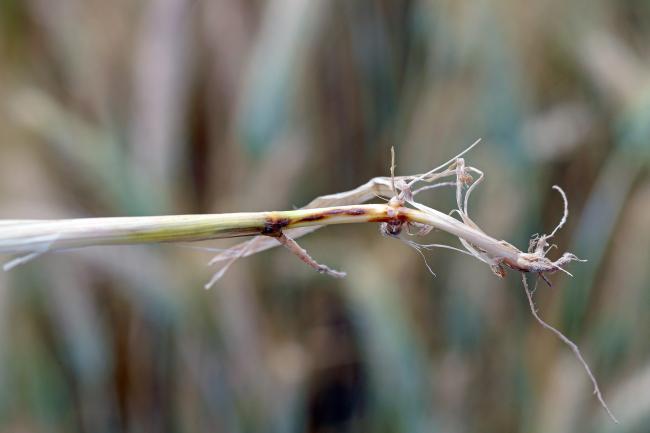
High-quality annotated genome assemblies are a vital resource for addressing threats to biodiversity and food security. For plant pathogens, these resources allow scientists to understand genetic factors in virulence, evolution, and resilience, helping develop more effective disease management. Take-all, caused by the soil-borne fungus Gaeumannomyces tritici, is a globally important wheat root disease, destroying up to twenty per cent of wheat yield annually in the UK.

To address this, scientists at the Earlham Institute and Rothamsted Research generated nine near-complete genome assemblies of G. tritici and other closely related fungi using PacBio Hi-Fi sequencing.

The results present a significant improvement in the characterisation of agriculturally important fungal pathogens, enabling more detailed comparative analysis. The paper also included contributions from A-Level student Ellie who was on placement at the Earlham Institute and discovered the absence of genes in the pathogen that may impact how it interacts with wheat.

Assessing airborne DNA sequencing technologies

Sequencing airborne DNA has transformed how we can understand environmental DNA. It has moved the field away from culture-based techniques to rapid in-situ analysis. As the technology has developed, so has the research field, with applications in pathogen detection, air quality monitoring, bioterrorism detection, and biodiversity monitoring.

Led by Mia Berelson, a PhD student in the Leggett Group, a review in Microbiology Research explained and compared current methods, and demonstrated how different approaches can influence the resulting data and suitability for specific use cases.

PhD researchers Mia and Jade setting up air samplers outside City Hall in Norwich

PhD students Mia Berelson and Jade Van-Wijk taking air samples in Norwich city centre

Starship discovery reveals new frontiers of fungal genome evolution

Scientists at Earlham Institute and Rothamsted Research revealed new insights into large mobile fungal genome elements, called Starships. The study used a technique known as k-mer based analysis to build a ‘tree of life’ that mapped out evolutionary relationships between different Starships for the first time using their entire sequences.

"If we can understand how some fungi prevent disease, and others cause it – and how they can sometimes switch between these two modes - we could potentially engineer more sustainable agricultural techniques," said Dr Rowena Hill, Postdoctoral Scientists and study co-author.

Dr Rowena Hill, Postdoctoral Scientist

Dr Rowena Hill, Postdoctoral Researcher

Starting point of DNA replication mystery solved

Creating an accurate copy of the genome - the entire length of DNA in a cell - is the fundamental step before cells can divide, the basis of all life on Earth. Errors in that duplication process lead to genetic changes that underpin evolution, but also give rise to diseases.

A study from the Nieduszynski Group at Earlham Institute, in collaboration with University of Oxford, generated enormous long-read DNA sequences and used halogenated nucleotides to reveal locations where the double-stranded helix teases apart to begin copying, with around 80 per cent of the sites having never been reported before.

Genomic resources for European biodiversity

Genomic data holds immense potential to inform conservation actions for endangered species, as well as driving discovery in the fields of health, biosecurity, and a range of other fields.

As part of a European-wide response to the threat of biodiversity loss, a multinational consortium of researchers is generating high-quality reference genomes for all European eukaryotic species.

The Arctic Charr genome represents one of the species analysed as part of the European Reference Genome Atlas. This resource has already enabled researchers to explore how environmental variation drives genetic change, providing fresh insight into the evolutionary processes that underpin adaptation and speciation.

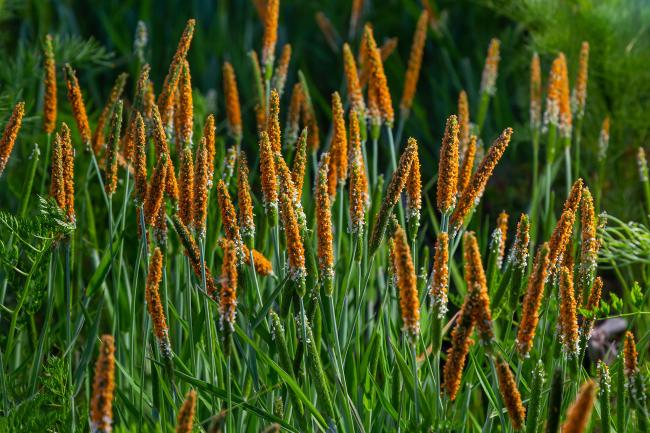
Enabled by the National Bioscience Research Infrastructure in Transformative Genomics, Earlham Institute scientists have been collaborating with partners across Europe to generate new reference genomes for species from Iceland, Malta, Czechia, the Azores and the UK. In 2025, this work led to the publication of high-quality genomes for the Arctic Charr, a wood-decaying bracket fungus, and the orange foxtail grass.

Dr Karim Gharbi, Head of Technical Genomics

Dr Karim Gharbi, Head of Technical Genomics

Mapping wheat diversity for global food security

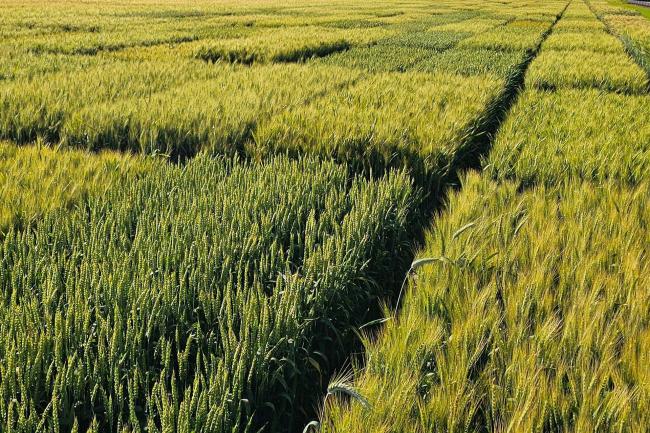
Wheat has a very large and complex genome, with huge diversity across different varieties. A landmark study, led by the Earlham Institute and Helmholtz Munich as part of a global collaboration, has generated the first wheat pan-transcriptome - a comprehensive map of gene activity across multiple wheat varieties.

By mapping this gene activity for the first time, researchers are able accelerate international wheat breeding programmes, developing new varieties of wheat which can adapt to the rapidly escalating climate emergency.

“We discovered how groups of genes work together as regulatory networks to control gene expression. Our research allowed us to look at how these network connections differ between wheat varieties revealing new sources of genetic diversity that could be critical in boosting the resilience of wheat,” said Dr Rachel Rusholme-Pilcher, Senior Postdoctoral Researcher at the Earlham Institute and co-first author.

AI model transforms circadian insight at gene expression level

The circadian clock is a finely-tuned regulatory mechanism that aligns biological processes in an organism - such as photosynthesis, growth, and response to stress - with the external day-night cycle. A plant’s health and productivity can all be affected by the robustness and synchronisation of the clock. 

Scientists at the Earlham Institute, in collaboration with the John Innes Centre, have developed an AI tool to examine the timing of a plant's internal clock, using transcriptome information. ChronoGauge is a machine learning model trained on gene expression patterns to accurately predict a plant’s circadian time from gene activity. This approach dramatically reduces the cost and time required by traditional methods, allowing researchers to analyse circadian rhythms from a single time-point transcriptome sample.

Connor Reynolds, PhD student in the Anthony Hall Group

Connor Reynolds, PhD Researcher 

Single-cell genomics reveals hidden bacterial threats

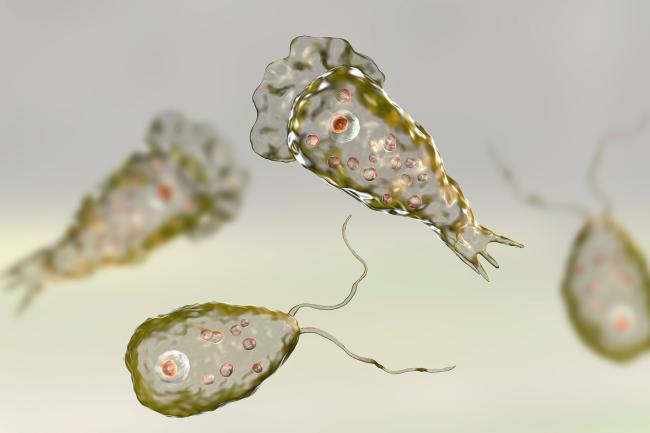
Scientists sequencing two free-living amoebae related to the deadly “brain-eating amoeba” Naegleria fowleri discovered they both contain bacteria linked to Legionnaires’ disease.

As part of the Darwin Tree of Life project, Jamie McGowan and James Lipscombe adapted existing protocols to sequence single cells from environmental samples. The study demonstrates the impact of single-cell sequencing to disentangle complex genetic relationships. 

Uncovering how crop pathogens may be evolving in wild reservoirs

Scientists in the Neil Hall Group at the Earlham Institute - in partnership with IBM Research and the British Beet Research Organisation (BBRO) - explored how crop pathogens (beet rust) - evolve to evade resistance, potentially using wild crop relatives as alternative hosts. 

The findings are an important step forward in understanding how major crop pathogens emerge, and how differences in pathogen populations might be used to identify genes important for survival on crops and adaptation.

Stay up-to-date

Sign up to receive our monthly newsletter to hear about the latest science from Earlham Institute: