



















Image


Scientists developing a single-cell sequencing pipeline at Earlham Institute have revealed previously unknown diversity from a group of free-living protists closely related to the parasites that cause sleeping sickness.
Researchers from the Earlham Institute, in collaboration with The Department of Biology at the University of Oxford, discovered three previously unrecognised lineages of the protist Bodo, each with its own bacterial endosymbiont (a symbiotic organism living within the body of its host).
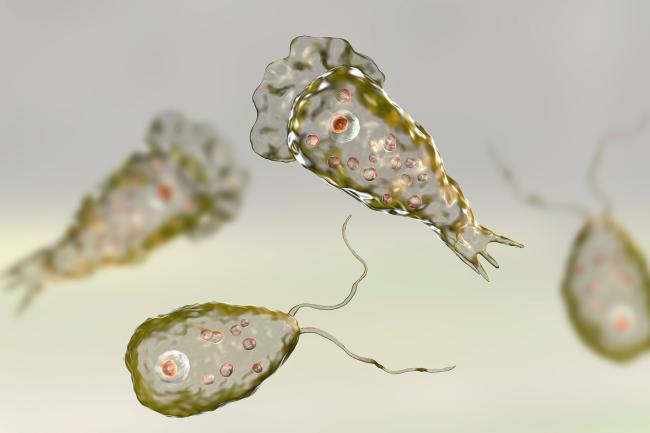
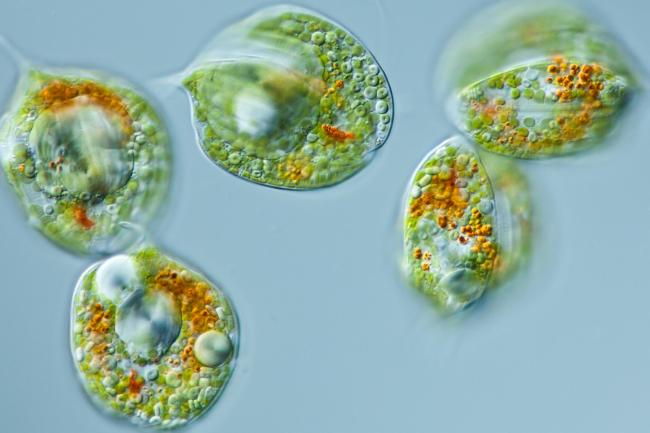
Bodo is a genus of heterotrophic (a living organism that obtains nutrition from other plants, animals, or microorganisms) protists that are common in fresh and brackish waters and soil. They are the closest known free-living relatives of Trypanosoma, a parasitic protist that causes major human diseases including Human African trypanosomiasis (sleeping sickness).
Until now, genomic studies of Bodo came from a single species, Bodo saltans. This research isolated, sequenced, and assembled genomes for seven uncultured Bodo spp. single cells from a freshwater sample, revealing three potentially novel species that diverge significantly from B. saltans. Additionally, the researchers identified that each novel species carried its own distinct species of the Holosporales bacteria.
Published in Microbial Genomics, the study forms part of the Darwin Tree of Life project and contributes to the Institute's Decoding Biodiversity programme, which is developing a robust single-cell sequencing pipeline for protists from environmental samples.
Protists are hugely diverse and are notoriously complex to sequence and analyse, but they hold incredible potential for biotechnology applications, addressing challenges in climate change and biodiversity, and answering fundamental questions about evolution.
Most studies until now have used cultured cells or bulk environmental samples to classify microbial eukaryotes. However, these methods fail to distinguish between closely related species and miss their associated bacterial symbionts entirely, obscuring the true complexity of these microscopic ecosystems.

Dr Sally Warring, Protistologist
Dr Sally Warring, Protistologist in the Microbial Genomics Group at Earlham Institute said: "The diversity we can culture in the lab represents a fraction of what exists in the wild, and we currently have very little genomic information for most of these organisms. Single-cell approaches are now changing that, giving us a much greater depth of insight into microbial eukaryote diversity.
"This clearer picture of hidden biodiversity will help the community inform biodiversity and conservation strategies, and deepen our fundamental understanding of species evolution."
The insights generated were achieved thanks to the specialist expertise and infrastructure in single-cell genomics within the National Bioscience Research Infrastructure in Transformative Genomics, with scientists using the latest technologies, and adapting existing protocols to sequence single cells from environmental samples.
The results highlight how single-cell sequencing and comparative genomics can reveal complex diversity and associations within and between populations of microbial eukaryotes and their hosts.
Jim Lipscombe, Senior Research Assistant in the Technical Genomics Group at Earlham Institute said: “From just a few individual organisms, using single-cell techniques, we have gained fascinating insight into symbiosis, taxonomic diversity and even genetic code variation. However, this is only a glimpse of what we stand to discover if we can continue to improve upon and, importantly, scale such techniques.
“With developing technologies, such as spectral cell sorting, we’re capable of capturing visual as well as omics data from individual cells, which when combined with automation and other tools, will help accelerate these analyses”
Protist research at the Earlham Institute is aiming to unravel the intricate nature of protist biology to better reveal how different species evolve and interact with each other and their environments. This new study builds on previous research from the Microbial Genomics and Dr Jamie McGowan (now at University College Dublin) which revealed hidden bacterial threats in Amoeba.
Sally and the research team at Earlham Institute are now looking to incorporate this approach into wider soil research at the Institute, exploring symbiotic associations between protists and soil bacteria.
The paper ‘Single-cell sequencing reveals unexpected genetic diversity among Bodo spp. flagellates and their bacterial endosymbionts’ is published in Microbial Genomics.
The study was part of the Wellcome Darwin Tree of Life project, with support from the Biotechnology and Biological Sciences Research Council (BBSRC), part of UK Research and Innovation, through the Decoding Biodiversity Strategic Programme and National Bioscience Research Infrastructure in Transformative Genomics at the Earlham Institute.
About the Earlham Institute
The Earlham Institute harnesses data-driven biology to accelerate solutions for health, biodiversity and food security. The Institute combines world-class technology and interdisciplinary expertise across genomics, engineering biology and data science to deliver scientific breakthroughs with economic and social impact.
Based at Norwich Research Park, the Earlham Institute is one of eight institutes strategically funded by BBSRC.