



















Special Feature Science
March 19, 2026

Seven ways Earlham Institute’s research improves future health

At the Earlham Institute we harness the power of data-driven biology to accelerate solutions for health, biodiversity and food security. Using world-class technology platforms – we can reveal new insights into diseases and expand our understanding of human biology like never before.

From the gut microbiome to stem cell biology, our health-focused research is generating new knowledge to deliver improved and more effective diagnostics, personalised treatments, and health interventions.

Using world-class technology platforms – we can reveal new insights into diseases and expand our understanding of human biology like never before.

1. Our health research spans fundamental biology to rare diseases

Do you know the scale and breadth of our health research? 

From uncovering the mystery of DNA replication–a hotspot for mutations that cause genetic diseases such as cancer–to using single cell analysis to study rare liver disease, the combination of our technology and research expertise has huge potential to tackle complex questions in human biology. 

2. Our health research maps human cells to generate new insight

By studying the regulation of gene expression, we can gain insight into which cell types are present, where they’re located, and how those cells may be functioning at a given moment. Dr David Wright, Senior Computational Biologist at the Earlham Institute, uses epigenetics approaches to learn more about how cell development is regulated in the placenta as part of a collaboration with UEA and the Norfolk and Norwich University Hospital.

Meanwhile in the Papatheodorou Group, Postdoctoral Research Scientist, Dr Greg Wickham is developing computational models to understand disease trajectories in late-stage Crohn’s disease from single-cell transcriptomic data as part of the Gut Cell Atlas project.

3. Our health research integrates our expertise in microbiology with health outcomes

Dr Christopher Quince, Group Leader at the Earlham Institute and Quadram Institute, has pioneered new methods for studying microbial communities. These approaches have driven progress on major health challenges – from understanding the spread of non-viral gastroenteritis in Pakistan and analysing the role of therapeutic diets in treating Crohn’s disease, to examining the impact of antimicrobial resistance in the environment and human gut.

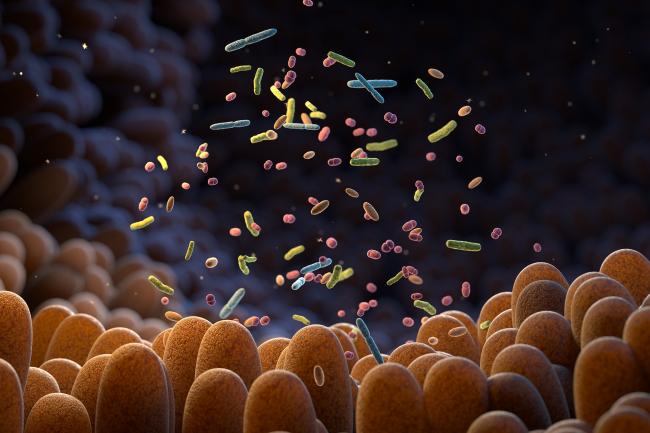
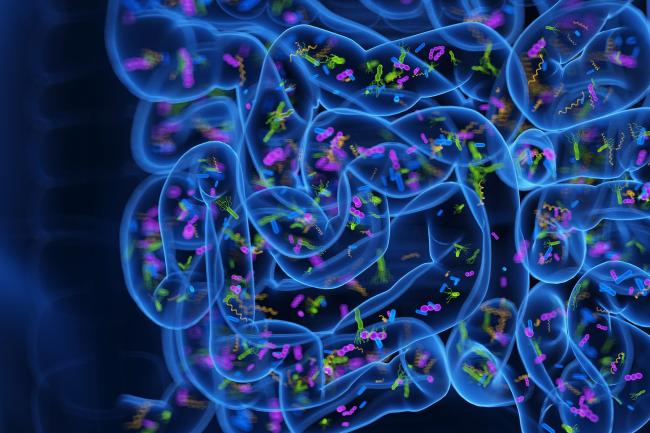
Also Group Leader at the Earlham Institute and Quadram Institute, Prof Falk Hildebrand, harnesses microbial communities to interrogate conditions such as IBD and Parkinson’s disease. Recently identifying a set of common ‘signatures’’ of the human gut microbiome and the bacteria involved in these communities, Falk’s research in understanding how these complex communities could influence targeted treatments.

Research in prevention and treatment improves health outcomes

Numerical graphic of 500,000

It’s estimated that more than 500,000 people in the UK live with IBD, with around 25,000 new diagnoses of Crohn’s disease or ulcerative colitis each year.

3 repeated line icons of a platelet cell

Megakaryocytes in your body produce more than 1 million platelets a second, but platelet production and function slows as we age with a high percentage of older people suffer from immune system deterioration

A line icon representing a simplified brain structure, beside text that reads: "1 in every 100"

Schizophrenia is a serious mental illness that affects 1 in every 100 people in the UK.


4. Our health research translates into tangible improvements in how people live

Dr Edyta Wojtowicz, Group Leader at the Earlham Institute, uses the latest single-cell genomics and imaging techniques to study the impact of diet on blood cell development in health and disease, particularly the influence of dietary components (protein, fatty acids, complex carbohydrates) on immunity and blood cell production. 

The impact of this research will enable health professionals to advise western populations on how to support their immune systems through their diet. 
 

5. Our health research supports targeted drug development

Dr Wilfried Haerty, who leads the Cellular Genomics research programme at the Earlham Institute, is pioneering new approaches to identify therapeutic targets for serious mental health conditions, including schizophrenia. By combining genomics and computational analysis, his work is helping to identify the biological systems that could inform safer and more targeted therapies.

Dr Haerty also leads the Earlham Institute’s involvement in a ground-breaking project to develop personalised medicine to tackle cardiovascular disease, whereby prevention and treatment of disease is tailored to an individual’s unique genetic make-up and health information.


6. Our health research accelerates earlier diagnosis

Earlham Institute Group Leader, Dr Richard Leggett, works on developing technologies, software, and methods to speed up pathogen detection and diagnostics in a multitude of environments. 
Applied to clinical settings this research has the potential to accelerate the detection and monitoring of infection, particularly in monitoring pathogens and AMR resistance in human microbiomes.

His group has collaborated with scientists and clinicians across the Norwich Research Park to pioneer a new method for profiling the microbiome of preterm babies that can significantly speed-up the identification of infections and indicate more effective treatments.
 

7. Our health research is collaborative!

We work with a huge range of collaborators to enable and ensure our health research is grounded in the needs of the communities we serve. 

From sharing expertise, to working with patients contributing to research – every collaborator brings an essential component that enables greater health benefits. 

Logos of the Norwich Research Park, NNUH, UEA, and Quadram Institute

Subscribe to hear more