



















Image


Sequencing the DNA of all complex life in the UK and Ireland could generate up to almost £3 billion for the economy across agriculture, conservation, and research over the next 30 years, according to a new report.
The Darwin Tree of Life Project, a collaboration including experts at the Wellcome Sanger Institute, Natural History Museum, Earlham Institute and many others1, aims to sequence the DNA of all findable eukaryotic organisms in the UK and Ireland, including animals, plants, and fungi, totalling an estimated 30,000 species.
A new report, published today by Frontier Economics, has calculated how much this revolution in biology will benefit the UK economy through things such as improving crop resilience and pest control on farms, advances in medicine and biotechnology, and more efficient conservation projects.
This report showcases the substantial return on investment that the project offers. It highlights how the Darwin Tree of Life Project has already saved the global scientific community £55 million in research costs to date by providing over 2,500 reference genomes for open access use.
The instructions for every living thing are found in its DNA, along with its genetic story, tracking where it came from, how it evolved to adapt to new challenges, and how it might handle such changes in the future.
The Human Genome Project decoded this for humans, and in turn, revolutionised science and medicine, generating more than $750 billion in economic activity from a $4 billion investment2. The Darwin Tree of Life Project, which started in 2019, aims to do the same for all the species around us in the UK and Ireland, and contribute to the wider, global Earth BioGenome project3.
The Frontier Economics report has identified three key areas where the economic impact will be felt:
Additionally, the Darwin Tree of Life Project has supplied 30 per cent of the world's biodiversity genomes, making it a world-leader in genomic research. The project also provides open-access protocols, tools, and training to biodiversity genomics programmes worldwide, with experts advising on international projects including those in Norway, Brazil, and Australia.
Prof Neil Hall, Director of Earlham Institute said: “This report puts hard numbers on what the research community has long understood: that open-access reference genomes are foundational infrastructure for modern bioscience, with returns for biotechnology, agriculture, conservation, medicine and discovery research.
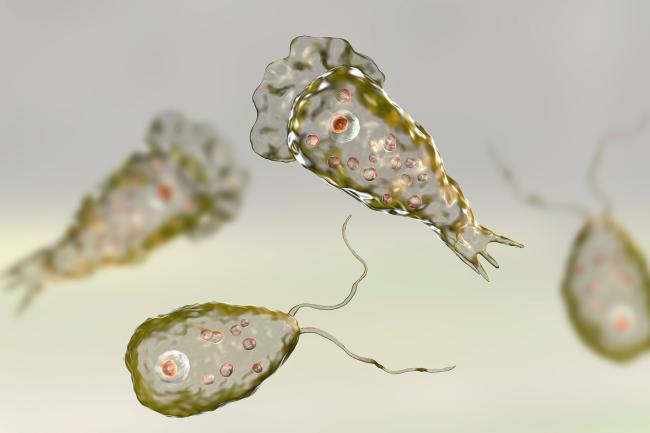
“At the Earlham Institute, we’re proud to have contributed to this effort, particularly through our work on protist diversity - the single-celled eukaryotes that are often overlooked but are fundamental to the functioning of every ecosystem on Earth. What this report makes clear is that the value of the Darwin Tree of Life Project extends far beyond the genomes themselves. It lies in the shared protocols, trained people, open data, and the collaborative networks - underscoring the strength in UK genomic research.”
Professor Mark Blaxter, Head of the Tree of Life Programme at the Wellcome Sanger Institute, said: “The Darwin Tree of Life Project is an ambitious project, and one that many of us have always believed would fundamentally change biology by decoding all life in Britain and Ireland. This report shows that our project will also have a significant beneficial financial impact over the next 30 years, highlighting how much it pays to invest in understanding and protecting biodiversity, improving conservation, and generating knowledge that benefits both people and the living world around us.”
Christiane Hertz-Fowler, Head of Directed Activity at Wellcome, said: "The significance of the Darwin Tree of Life project cannot be underestimated, as demonstrated by the huge number and diversity of genomes already sequenced and by the scale of its potential economic impact in the upcoming decades. When we first began funding this ambitious project, we knew that we would unveil a rich tapestry of insights into life and nature throughout the UK & Ireland, creating remarkable scientific impact. Now, this report underscores the importance of investing in ambitious, transformative discovery research to help us better understand life around us, in turn helping us solve health challenges around the world."
Professor Ian Barnes, Research Leader at the Natural History Museum, said: "Capturing the genetic secrets of complex organisms in the UK and Ireland can help us understand how life has evolved and will adapt in the future. Climate change threatens our food security, biodiversity, and ecosystems, causing environmental and economic impact. Our report shows that the Darwin Tree of Life reference genomes can help to offset this. The keys to some of our biggest challenges could be found in the DNA of the species we are studying. We need to invest in unlocking it to create a future where both people and planet thrive.”
At the Earlham Institute, we are developing and applying cutting-edge single-cell genomics and scalable bioinformatics workflows to generate high-quality genomes from some of the most underrepresented branches of the tree of life, particularly microbial eukaryotes (protists).
Building on recent advances, our work focuses on overcoming key technical challenges associated with low-input and uncultured organisms, enabling robust genome assembly, annotation, and comparative analysis from individual cells and complex environmental samples.
These new approaches are revealing fundamentally new biology in microbial eukaryotes.
For media enquires, please contact:
Rachael Smith, Press Office,Wellcome Sanger Institute
07827979492 | press.office@sanger.ac.uk
Publication: J. Carvalho, H. Olorenshaw, D. Popov. (2026) ‘The value of reference genomes and the Darwin Tree of Life Project’. Frontier Economics. DOI: 10.5281/zenodo.19472560
Funding: The report was funded by the Wellcome Sanger Institute's core funding.
About the Earlham Institute
The Earlham Institute harnesses data-driven biology to accelerate solutions for health, biodiversity and food security. The Institute combines world-class technology and interdisciplinary expertise across genomics, engineering biology and data science to deliver scientific breakthroughs with economic and social impact.
Based at Norwich Research Park, the Earlham Institute is one of eight institutes strategically funded by BBSRC.
Darwin Tree of Life Project
The Darwin Tree of Life Project is a collaborative effort to sequence all findable eukaryotic life in Britain and Ireland. The gold-standard reference genomes produced are open access and will help transform how the scientific and research community conducts biology, biodiversity, and conservation research. The Darwin Tree of Life Project is one of several initiatives worldwide working towards the ultimate goal of sequencing all complex life on Earth, as part of the Earth BioGenome Project.