How single-cell genomics is unmasking the hidden diversity of protists
From giant kelp forests to the microscopic parasites in a single drop of water, protists represent the vast bulk of eukaryotic phylogenetic diversity.
Neither plant, animal, nor fungi, this vast group of microorganisms contains many of the unsung heroes and formidable pathogens of the Earth’s ecosystems.
But despite their ecological dominance, protists remain a genomic ‘black box’. At the Earlham Institute (EI), researchers are tackling this head-on, using high-precision single-cell genomics to decode the complex lives of these enigmatic organisms.
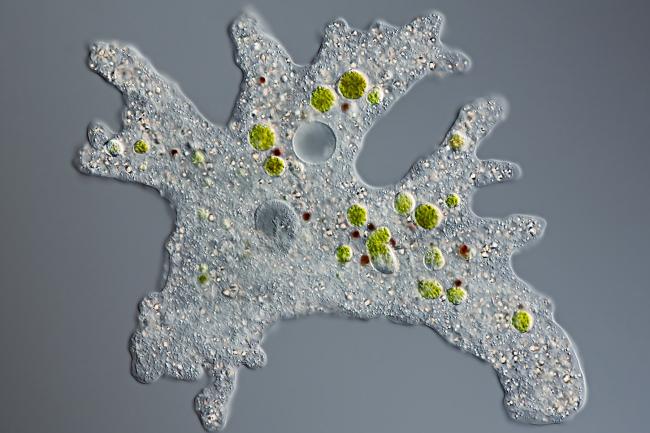
For Dr Sally Warring, a protistologist in the Neil Hall Group, the fascination began with the aesthetic and behavioural complexity of life under the microscope. "I started studying protists during my undergraduate years in Melbourne because they were simply beautiful”, she recalls. “Their sheer variety of shapes, colours, movements and behaviours is amazing.”
“They hunt prey, follow light or chemical signals, and even build protective cocoons", says Sally. "Some form resistant spores that lie dormant in the soil for years and then reanimate when it rains or under the right temperature conditions.”
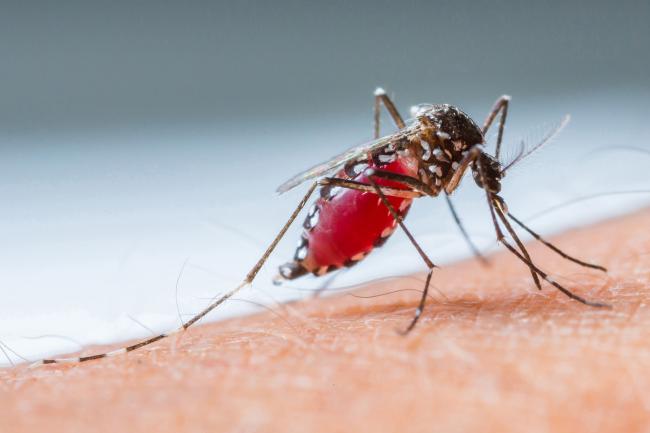
Sally was also captivated by the wide range of different lifestyles that protists employ. While some are notorious pathogens – like Plasmodium, responsible for over 600,000 malaria deaths annually – many are essential ecological heroes that fix carbon, produce oxygen, or remediate heavy metal pollution.
"They exist everywhere yet remain poorly understood", says Sally. “Understanding them is fundamental to uncovering how eukaryotic life evolves.”

Sally joined the Earlham Institute in 2019/2020 to work on the Darwin Tree of Life, an ambitious collaboration aiming to sequence the genomes of every eukaryotic species in Britain and Ireland. Her current research focuses on understanding the diversity of protists in natural environments and generating large-scale genome data for lineages underrepresented in the tree of life.
Because most protists are notoriously difficult to culture in a laboratory, Sally bypasses this bottleneck by sequencing them directly from environmental samples. Using high-precision Fluorescence-Activated Cell Sorting (FACS) to isolate individual cells, she can sequence genomes from organisms that have never been seen by a sequencer before – revealing novel taxa and filling critical gaps in our understanding of genome evolution.
This work also holds significant biotechnological promise, as these unique genomes often harbour the instructions for novel metabolites and survival strategies that could be harnessed for innovative applications.
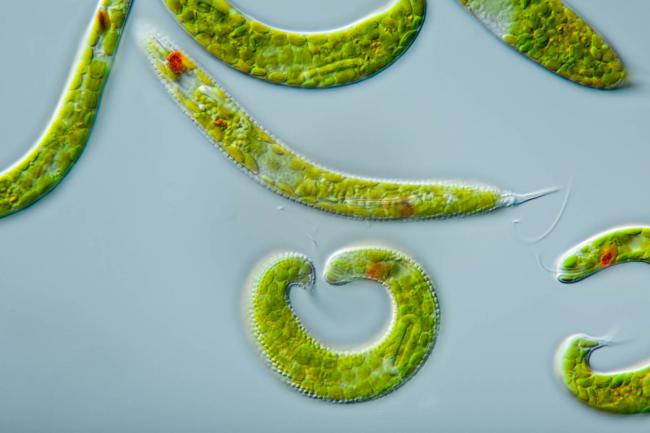
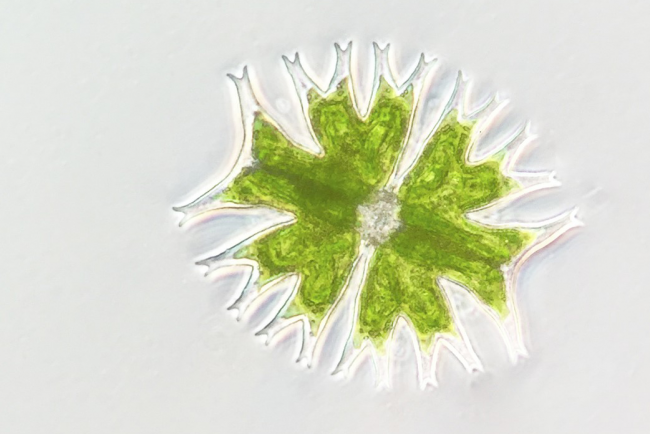
Euglena hiemalis
Euglena laciniata
Euglena longa
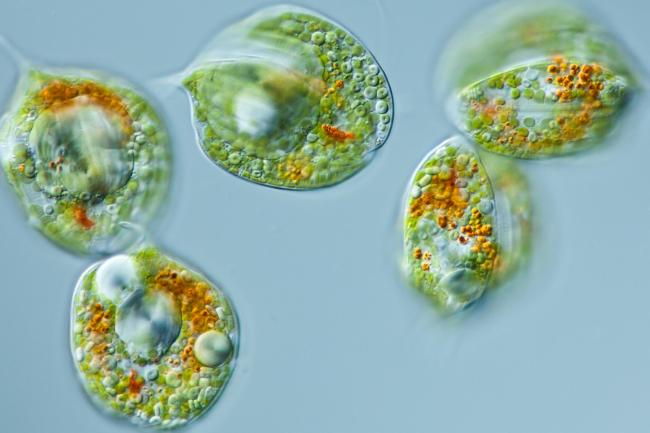
Phacus
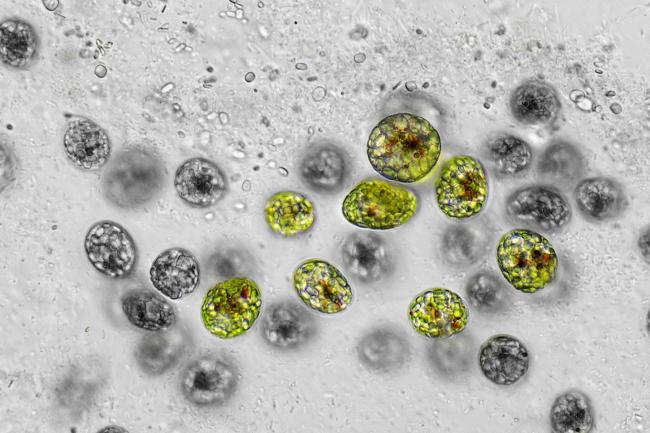
One of Sally’s PhD students, Santa Walker is building on this work through genomics studies exploring the metabolic diversity of Euglena. Santa first came to the Institute as a Year in Industry student and was drawn back for her PhD by the Institute’s breadth of research and friendly culture.
“Euglena is fascinating because of its evolutionary history of secondary endosymbiosis”, says Santa. “This has resulted in a hybrid metabolism, making it capable of producing high-value compounds ranging from high-performance jet fuels to health-boosting nutraceuticals and pharmaceuticals.”
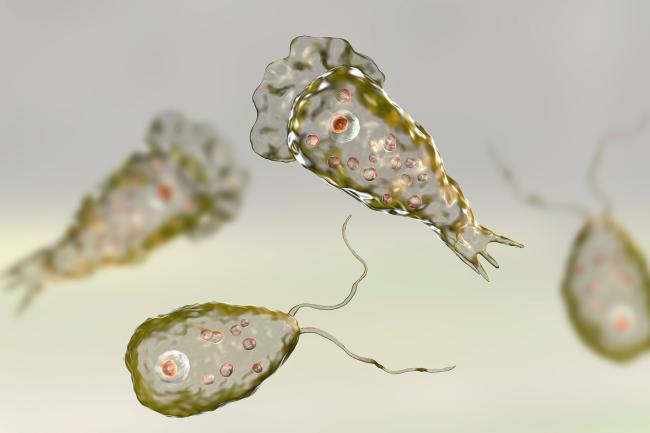
Despite this potential, the genus lacks high-quality reference genomes. So Santa is sequencing various species and mapping their genes to enzyme and genome databases to find potential metabolic pathways suited to biotechnology applications.
Intrigued by the weird world of protists? Learn more about them at this year's Norwich Science Festival!
Led by the Centre for Microbial Interactions and The SAW Trust, the Microbe Zoo is an interactive journey to explore a world normally unseen by the naked eye. Join 'zoo keepers' from Earlham Institute and Norwich Research Park as you move through different habitats and environments, exploring the diverse microbial organisms living there, including bacteria, fungi, viruses and algae.
Sequencing Euglena is no easy feat, however. "There are so many hurdles!" Santa laughs. “Most cultures aren't axenic (entirely free of other living contaminants); they’re teeming with bacteria and other organisms. We have to find a way to isolate the DNA we’re interested in, then navigate complications with cell lysis and DNA extraction to get enough clean DNA for sequencing.”
Furthermore, Euglena possesses multiple genomes (nuclear, mitochondrial and plastid) reflecting its symbiotic history. The nuclear genome is large (about 2 Gbp) and highly repetitive, featuring non-canonical bases and non-standard intron-exon boundaries. This makes genome assembly and annotation very complicated. "The algorithms often don't know what to make of it", says Santa.
Conquering these hurdles demands bespoke wet-lab protocols, cutting-edge single-cell technologies, and an agile computational pipeline. With in-house sequencing facilities and specialists intimately familiar with the quirks of non-model organisms, Earlham Institute provides the perfect environment to troubleshoot these complexities as they arise.
Dr Sally Warring
The next phase of this research is integrated into EI’s Decoding Biodiversity research programme. Recent upgrades to the Institute’s single-cell sorting facilities now allow for high-resolution imaging of cells in real-time. This is a game-changer for identifying and isolating specific taxa from complex environmental samples, particularly as the research expands into understanding the soil microbiome.
Sally and Santa are helping to incorporate protists into the Institute’s soil research programme to explore how these organisms regulate microbial populations, impact plant health, or act as indicators for environmental pollutants.
They are particularly interested in understanding the symbiotic associations between protists and soil bacteria, which could eventually allow for engineering the microbiome to improve nutrient cycling. This work provides the essential biological insights needed to protect soil health and future-proof the ecosystems that underpin global food security and life on Earth.
Authored by Dr Mimi Tanimoto, writing for Earlham Institute
Sign up to our monthly newsletter!