Conventional breeding has been essential for ensuring food security and improving crop traits over centuries. However, traditional plant breeding and selection can take decades to introduce beneficial traits, relying on random genetic mixing over multiple generations.
Modern agriculture is facing significant challenges, from climate instability, soil degradation, changes in land use, and conflicts drastically impacting global food security. This requires us to rethink how we develop new crops to feed our growing populations, replace fossil fuels, and provide new platforms for biomanufacturing.
Advances in synthetic genomics have opened new pathways for engineering biology, enabling the rapid design and construction of biological systems at scale for innovative applications and to address fundamental scientific questions.
Funded by a multimillion pound grant from the UK Government’s Advanced Research + Invention Agency (ARIA) as part of the Synthetic Plants programme, a multidisciplinary collaboration of researchers from Earlham Institute, University of Manchester, and John Innes Centre is leveraging these advances to establish synthetic plant chromosome (synPAC) technologies.
The research team aims to develop critically needed synthetic chromosome technologies with a robust and reproducible engineering system to allow the targeted programming of plants at a scale that can transform food security.
Building on natural processes, synPACs enable researchers to rapidly introduce multi-gene traits in a far more precise, controllable, and predictable fashion — offering an innovative alternative to conventional breeding methods.
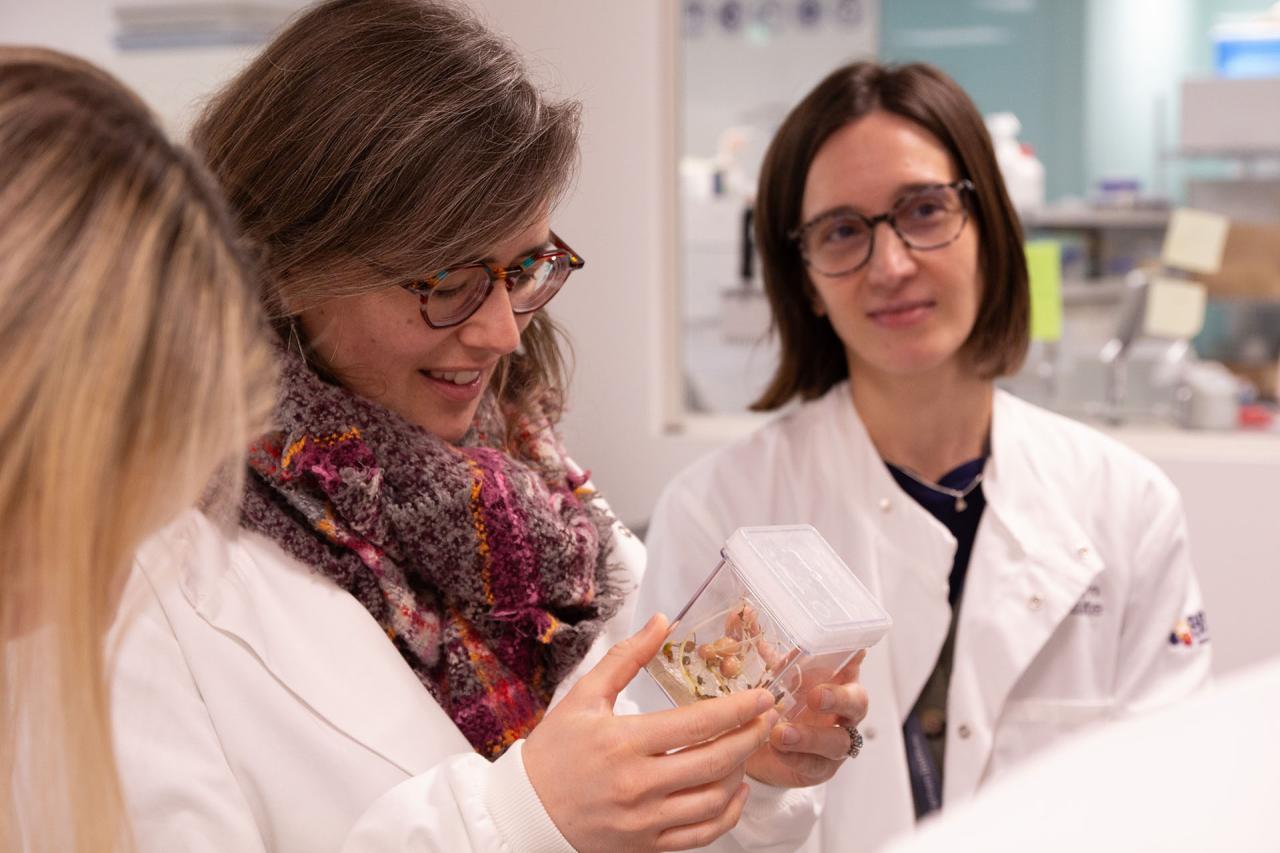
Pictured: ARIA Synthethic Plants Programme Director, Angie Burnett, with Head of the Earlham Biofoundry, Carolina Grandellis.