




















Image


Scientists present EISCA and EISTA: two standardised, end-to-end pipelines for single-cell RNA-seq and imaging-based spatial transcriptomics analysis.
This is a preprint and has not yet been peer reviewed. The pipelines are made publicly available on bioRxiv and GitHub.
Our aim is to develop pipelines that are comprehensive, flexible, and accessible. Both pipelines take users from raw sequencing or imaging data through quality control, batch integration, automated cell-type annotation, and cell-cell communication analysis. They combine reproducibility and scalability across HPC and cloud environments, while allowing researchers to run the full end-to-end workflow or individual modules iteratively to fine-tune their analyses.
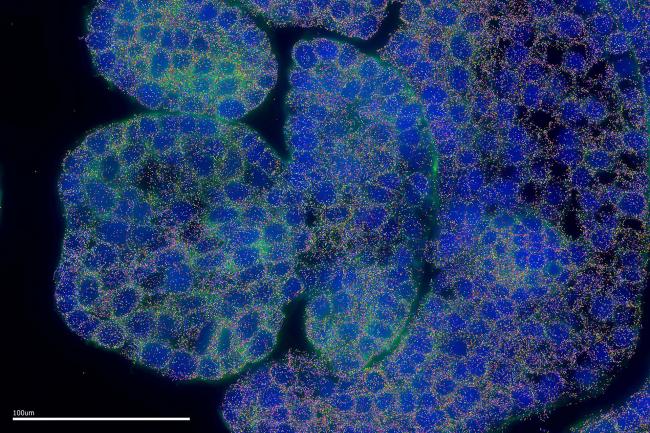
EISTA is one of the few end-to-end pipelines specifically tailored to high-resolution, imaging-based spatial transcriptomics platforms such as Vizgen MERFISH. It enables users to rapidly explore relationships between gene expression patterns and biological morphology. In this preprint, we demonstrate its usability through case studies in Arabidopsis spatial and human single-cell transcriptomics.
We invite researchers to try EISCA and EISTA on their own single-cell and spatial transcriptomics datasets. A hands-on tutorial for using the EISCA pipeline for single-cell RNA-seq analysis is available on GitHub. We also encourage users to report issues and suggest feature requests to help shape future developments.
Single-cell and spatial transcriptomics are transforming our understanding of cellular heterogeneity and tissue organization, yet their analytical complexity remains a major bottleneck. Here, we present EISCA and EISTA, two standardised, end-to-end pipelines for single-cell RNA- seq and imaging-based spatial transcriptomics analysis.
Built on the Nextflow nf-core framework, both pipelines implement modular, scalable, and reproducible workflows spanning primary, secondary, and tertiary analyses, from raw data processing to advanced downstream analyses. EISCA supports droplet- and plate-based scRNA-seq technologies, while EISTA is tailored for high-resolution spatial platforms including Vizgen MERFISH and 10x Xenium.
Together, they integrate state-of-the-art methods for quality control, normalization, clustering, integration, cell- type annotation, differential expression, and cell-cell communication, with EISTA further enabling spatial statistical analyses. A central design principle is to balance standardisation with flexibility: workflows can be executed end-to-end or modularly, enabling iterative, exploratory analyses with minimal overhead. Both pipelines deliver rapid preliminary results alongside an out-of-the-box report, facilitating immediate data assessment and accelerating downstream discovery.
Case studies in plant immunity and human sepsis demonstrate that EISTA and EISCA reproducibly can be used to recover biologically meaningful insights. Collectively, these pipelines provide efficient, flexible, and scalable solutions for comprehensive single-cell and spatial transcriptomics analyses.
Open Science at Earlham Institute
The Earlham Institute is a strong advocate of open science, both as a publicly-funded organisation and in recognition of the huge benefits that come from unimpeded access. These benefits include increased efficiency, greater quality and integrity of science, improved transfer of knowledge, innovation across sectors, and the opportunity for everyone to be engaged with science.
Wherever possible, we publish in open-access journals, make our software and tools available as open source on platforms such as GitHub, and use standardised metadata to improve both reproducibility and clarity for other researchers wanting to use our datasets.