



















Event Scientific training

de novo Assembly 2018

The course will provide a hands-on introduction to de novo assembly, followed by in-depth analysis of the key stages in the process.

Start date: 13 March 2018
End date: 16 March 2018
Time: 09h30 - 16h00
Venue: Earlham Institute
Organiser: Emily Angiolini
Registration deadline: 18 February 2018
Cost: £200.00
About the event

What's the course about?

The course will provide an introduction to de novo assembly, with a hands on introduction followed by in-depth analysis of the key steps in the process. It covers several aspects such as the initial setup of a de novo genome sequencing project, quality control and preprocessing of datasets, generation and evaluation of first pass assemblies, assembly improvement and finishing. Practical exercises will be performed on small-scale real datasets, including Illumina and Pacbio sequences, including best practices and tips based on EI's faculty experience.

The course will consist of a mixture of conceptual lectures, methodological lectures and hands on sessions, as well as group activities and discussions. The participants will gain first-hand experience and understanding on NGS assembly, working with the assistance of the faculty, troubleshooting small problems, and reviewing the results.

What will I learn?

  • Understand the strategic setup of a de novo genome sequencing project, combining different types of data in a coherent approach
  • Acquire means to define goals for an assembly project and monitor its progress
  • Learn to effectively assess the sequencing data sets' quality
  • Understand assembly tools' parameters and their effects, being able to progress from a first-pass to a draft sequence release version.

Register today.

Registration deadline: 18 February 2018

Participation: Open application with selection process

Research

Angela Man

Senior Postdoctoral Research Scientist
Image

Biography

Contact details:

  • +44 1603 450 956

angela.man@earlham.ac.uk

ORCiD

I have PhD in Plant Molecular Biology from University of Bristol which involved the molecular characterisation and manipulation of a protein kinase in potato. Since then, I have diversified and expanded my skills and techniques, working on several cell biology and immunology projects at the Institute of Food Research and more recently, the University of East Anglia.
 
These projects include an in vitro study of the role of a specialised immune cell type of the gut in clearance of particulate antigens, looking at immune cells and cytokines involved in allergy, dissecting the mechanism for clearance of pathogens in the gut by dendritic cells, ascertaining immune changes in ageing human gut, looking at the effects of faecal microbial transplantation in the gut, brain and systemic immunity of ageing mice and finally, studying the changes in immune cells of transgenic autophagy-deficient mice.

I joined the Earlham Institute as a Postdoctoral Researcher in September 2017 to work on the project “Understanding influenza A virus: linking transmission, evolutionary dynamics, pathogenesis and immunity in pigs”. I am currently a Senior Postdoctoral Research Scientist in the Nieduszynski Group. 

Research

Rachel Rusholme Pilcher

Senior Postdoctoral Research Scientist
Image
Rachel Rusholme-Pilcher, Profile Picture

Biography

Contact details:

  • +44 1603 450 726

rachel.rusholme-pilcher@earlham.ac.uk

ORCiD

As a Postdoctoral Researcher in Anthony Hall’s Group I am working on a BBSRC funded project that brings together field phenotyping and next generation genomics to investigate drought tolerance in bread wheat. In collaboration with researchers in India at ICAR-Indian Institute of Wheat Barley Research (IIWBR) and ICAR-National Institute Abiotic Stress Management (NIASM) together with the University of Lancaster, a wheat diversity panel consisting of over 300 lines prescreened for drought and heat tolerance will be extensively genetically and phenotypically characterized to uncover the genomic regions and key mechanisms associated with the ability of wheat to maintain yield stability under drought conditions. This project will demonstrate how genomic technologies and phenotyping strategies can be brought together and utilised to address important issues in crop stress biology and resource use efficiency.

Prior to joining the Earlham Institute I worked at the UEA on the bioinformatics analysis of next generation sequencing datasets generated from RNA-seq experiments, and am particularly interested in bringing together NGS transcriptomics and genetic analysis to explore the regulatory mechanisms underlying key agronomic traits.

I have a background in crop science, molecular genetics and bioinformatics and have worked with a range of agricultural and horticultural crop species; mapping genes controlling of disease resistance in brassica and apple, dwarfing ability of rootstocks in apple and identifying novel small RNA linked to fruit development in tomato.

Research

David Wright

Senior Computational Biologist
Image
Profile photo of Dave Wright

Biography

Personal Pronouns: He/Him

Contact details:

  • +44 (0) 1603 450 929

david.wright@earlham.ac.uk

DaveJWright

@davejwright3

ORCiD

I am fascinated by how organisms utilise their genomic diversity and the implications of aberrant regulatory processes or diversity loss for future evolutionary potential. I use an integrative approach encompassing bioinformatics, experimental data, and fieldwork to explore the mechanisms of genome regulation, change and persistence that influence this potential.

I work with a range of organisms and model systems, from population level to single-cell resolution and utilise several methodologies, with a recent focus on human long-read transcriptomics.

I’m currently a Senior Computational Biologist working with the Haerty and Macaulay Groups as part of the Cellular Genomics Research Programme.

In a recent project I used emerging technologies and approaches to understand mechanisms of transcription and epigenetic regulation in human development, in close collaboration with the Monk Group (UEA).

I received my BSc Zoology with Conservation (Hons) from Bangor University in 2009, working with critically endangered bongo (Tragelaphus eurycerus isaaci). I then completed my PhD in Molecular Ecology at the University of East Anglia (UEA) in 2014, during which I investigated evolutionary and conservation genetics of the Seychelles warbler (Acrocephalus sechellensis).

I subsequently worked on various projects including captive breeding program genetics for the Asian Houbara bustard (Chlamydotis macqueeni) and invasion biology in tree bumblebees (Bombus hypnorum) before moving to the Earlham Institute in 2017.

Event Scientific training

Software Carpentry Workshop October 2017

Our goal is to help scientists become more productive by teaching them basic computing skills like program design, version control, testing and task automation.

Start date: 10 October 2017
End date: 11 October 2017
Time: 09h00 - 17h30
Venue: Earlham Institute
Organiser: Emily Angiolini
Registration deadline: 05 October 2017
Cost: £40.00

About the event

Important information
Please note, you will be required to bring your own laptop for the purposes of this workshop.

Our goal is to help scientists become more productive by teaching them basic computing skills like program design, version control, testing and task automation. In this two-day bootcamp, short tutorials will alternate with hands-on practical exercises. Participants will be encouraged both to help one another, and to apply what they have learned to their own research problems during and between sessions.
What are the objectives of the course?

You will learn to:

  • use the shell to do more in less time
  • automate your tasks and pipelines
  • write structured programs
  • use Git to manage and share information
  • how (and how much) to test programs

Target Audience
The course is aimed at researchers in the life science and computational science disciplines at all career stages. We particularly encourage students and post-doctoral scientists to attend, but the course is open to everyone.

Prerequisites
This is aimed at trainees with very little or no prior knowledge of programming.

Register today.

Registration deadline: 05 October 2017

Participation: First come, first served

Event Scientific training

Brassica Information Portal Workshop

This informal workshop will allow the user community to test and evaluate the Brassica Information Portal.

Start date: 15 June 2017
End date: 15 June 2017
Time: 12h00 - 16h45
Venue: Darwin Training Suite, Earlham Institute
Registration deadline: 12 June 2017
Cost: Free of charge

About the event

The Brassica Information Portal (BIP) is a repository for Brassica crop trait data. The concept of the portal is to allow the Brassica community to make their data publicly available and accessible. Our efforts with the ELIXIR standards community has meant that data entered into the repository will be done using controlled vocabulary and standardised data formats increasing the accessibility and reusability of community data.

Following recent developments to the BIP, we are looking to host an informal workshop to allow the user community to test and evaluate BIP’s different mechanisms for uploading Brassica trait and experimental population data. Users will also be able to contribute to future developments of the portal through feedback provided at the end of the workshop.

This will be a hands-on workshop where users will learn to submit an experimental plant population, including metadata on the plant background, using a simple Ruby tool. Following this, delegates will use the BIP interface to submit trial data, including trial set-up metadata and trait measurements.

Bring your own data “BYOD”

If you have your own data to be uploaded, you can bring it along and we will be happy to assist you with the upload. Please let us know as soon as possible, as some preparation is required for this.

You need to do several things:

No previous programming experience is necessary.

Find out more about the BIP.

Register today.

Registration deadline: 12 June 2017

Participation: Open to all

Event Scientific training

Data Carpentry Workshop 2017

Data Carpentry workshops are for any researcher who has data they want to analyze, and no prior computational experience is required. This hands-on workshop teaches basic concepts, skills and tools for working more effectively with data.

Start date: 21 November 2017
End date: 22 November 2017
Time: 09h00 - 17h00
Venue: Earlham Institute
Organiser: Emily Angiolini
Registration deadline: 17 November 2017
Cost: £60.00
About the event

Data Carpentry workshops are for any researcher who has data they want to analyze, and no prior computational experience is required. This hands-on workshop teaches basic concepts, skills and tools for working more effectively with data.

What is this workshop about?

Data Carpentry workshops are for any researcher who has data they want to analyse, and no prior computational experience is required. This hands-on workshop teaches basic concepts, skills, and tools for working more effectively with data. We will cover data organisation in spreadsheets, data cleaning, SQL, the command line, and R for data analysis and visualisation using examples from biology. Participants should bring their laptops and plan to actively participate. By the end of the workshop, learners should be able to more effectively manage and analyse data and apply the tools and approaches directly to their ongoing research.

Data Carpentry's aim is to teach researchers basic concepts, skills, and tools for working with data so that they can get more done in less time, and with less pain.

Who is the course for?

The course is aimed at researchers in the life science and computational science disciplines at all career stages. We particularly encourage students and post-doctoral scientists to attend, but the course is open to everyone.

What are the prerequisites for the course?

There are no pre-requisites, and we will assume no prior knowledge about the tools.

Register today.

Registration deadline: 17 November 2017

Participation: Open application with selection process

Event

Science Communication Workshop

In this workshop we will explore the complex nature of communicating ideas to a wide audience.

Start date: 29 August 2017
End date: 29 August 2017
Time: 08h00 - 11h00


Venue: Norwich Research Park
Organiser: Emily Angiolini
Registration deadline: 31 July 2017
Cost: TBC

About the event

It can be frustrating, as scientists, to try and explain our research to people. As scientists, we appreciate the value of our research and that of others. However, this isn’t incredibly obvious to most members of society, whether or not it lies in people’s best interests. Thus, we attempt to better inform people about scientific research through the medium of “science communication.”

In this workshop we will explore the complex nature of communicating ideas to a wide audience. We will focus on the language we use to communicate our research and then explore how best to cultivate an appreciation for (rather than a fear of) science.

Come prepared to learn, write, discuss and present your ideas in ways you might not previously have considered.

This workshop is part of the Genome 10K & Genome Science Conference 2017.

Register today.

Registration deadline: 31 July 2017

Participation: Conference attendees only

Research

Triticeae epigenomes for domestication

Exploring the wheat epigenome.

Plant breeding uses DNA sequence variation to make new allelic combinations for crop improvement. Our creation of the first wheat gene sequence assemblies (Brenchley et al Nature) has enabled new levels of high throughput precise genotyping for breeding this globally important crop. Nevertheless, there are other levels of heritable variation, such as epigenetic modifications, that are widely thought to play a key role in shaping genomes and creating new variation.

We have recently developed highly efficient re-sequencing technologies for wheat that can measure DNA methylation in genes of multiple lines. This provides an outstanding opportunity to assess epigenetic variation in a major polyploid crop and understand how it may influence traits.

The overall objective of this project is to use newly available wheat genome resources, together with  our innovative application of exome capture and bisulphite sequencing, to measure epigenetic modifications in wheat genes, and relate these to gene expression and the acquisition of new phenotypes, and how they may contribute to genetic changes such as gene loss during polyploid formation.

Impact statement.

The research programme will take a comprehensive approach to defining the epigenome of bread wheat, the functional consequences of epigenetic modifications, how the genome is re-shaped, stabilized and inherited in  newly formed hybrids, and how the environment may influence patterns of epigenetic modification. These are fundamentally important questions in biology and are necessary for understanding trait variation in wheat hybrids. This project will reveal new sources of potentially useful variation for crop improvement. The collaboration draws on the best expertise worldwide in epigenetics and wheat genomics to work in two integrated Work Programmes. All data will be managed in an open iPlant cyberinfrastructure, integrated with wheat genome resources  and provided in publicly accessible formats.

The specific objectives of this integrated research programme are to:

  1. Define the epigenome of the genome reference Chinese Spring 42, correlate epigenetic modifications to changes in gene expression and chromosome dynamics such as recombination, and establish a community standard for future work
  2. Survey the epigenomes of 8 elite wheat varieties to map variation in the epigenomes, identify epi-alleles and make markers to a subset of these, and assess the influence of breeding on the epigenome and its contribution to key traits
  3. Define epigenome variation in two tetraploid (AABB) and four diploid (DD) progenitors of bread wheat that will be used to make new hybrids.
  4. Establish how epigenetic marks are placed down in newly created synthetic hybrid wheat (SHW), how these are stabilised in subsequent generations, and how this affects gene structure and expression;
  5. Determine if environmental conditions such as elevated temperatures can influence patterns of epigenetic modifications during the stabilization of newly formed hybrids.

People working on the project.

Research

Genetic diversity in wheat

Using natural diversity to identify new markers or genes for key agricultural traits

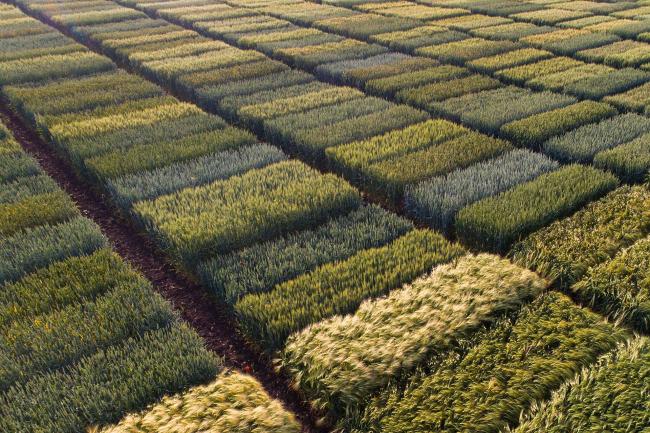
Food security is internationally recognised as one of the major global challenges of the 21st century. By 2050, it is predicted that world food production will have to increase by 50% to meet demand. This is against the pressures of global climate change and resource limitations. Meeting this challenge is going to require the development of innovative strategies to make use of our unprecedented knowledge of modern bioscience in the post genomic era. Developing new varieties of wheat will be fundamental to meeting the 2050 goal.

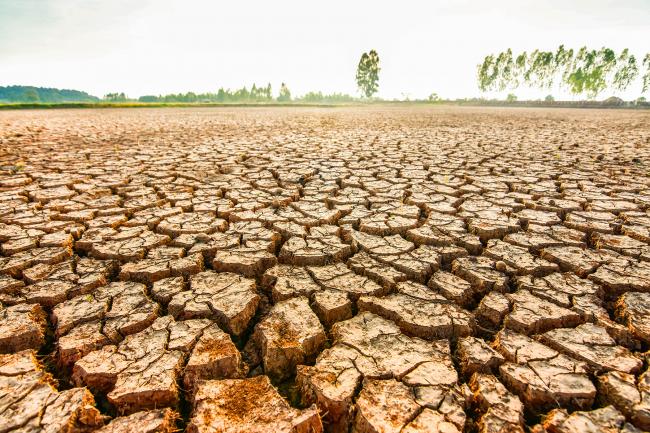
We now have a number of projects funded that aim to explore the  genetic diversity in wheat and through collaboration with physiologists and experts in high throughput phenotyping assocaite key traits with new markers, genes and alleles. Our current projects focus abiotic stress (heat and drought) and yield increase via enhancing photosynthesis.

Impact statement.

Ultimately, these projects aim to identify using germplasm and markers that can be used to improve, yield robustness of existing elite wheat cultivars.


Short term, during the projects we will develop and test new next generation genetic approaches to SNP discovery, we will generate high quality genotype data in an accessible form for globally important wheat lines.

Medium term, the projects will provide validated SNPs linked to enhanced photosynthetic performance and yield stability , it will also provide material for crossing to elite cultivars. It is also likely to identify genes and alleles underlying these traits.

Long term, identifying genes underlying traits will allow transgenic approaches to further enhance yield and yield stability . Also identification of specific mutations will allow precision genome engineering of elite wheat lines.

People working on the project.